Faceback Repair Requirements
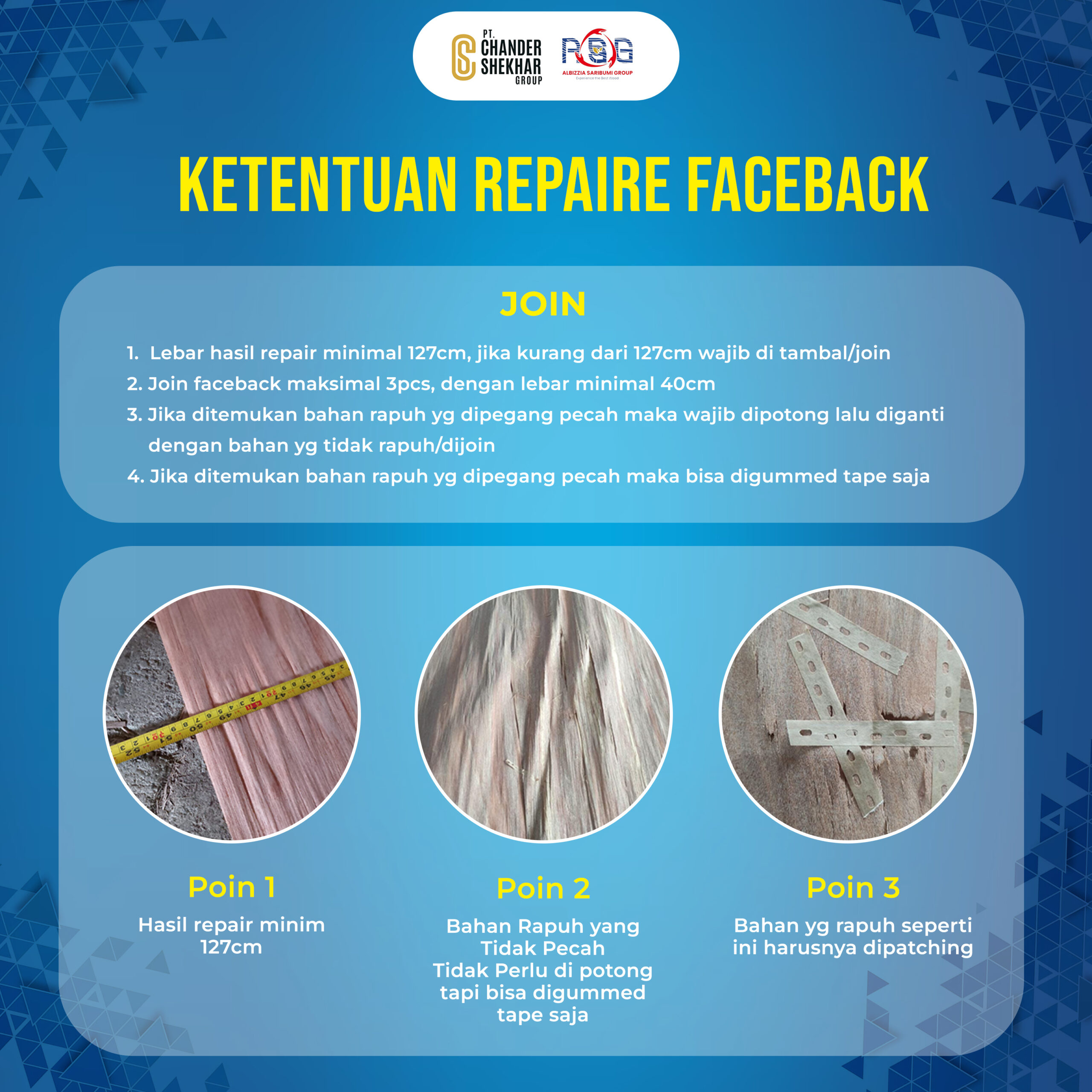
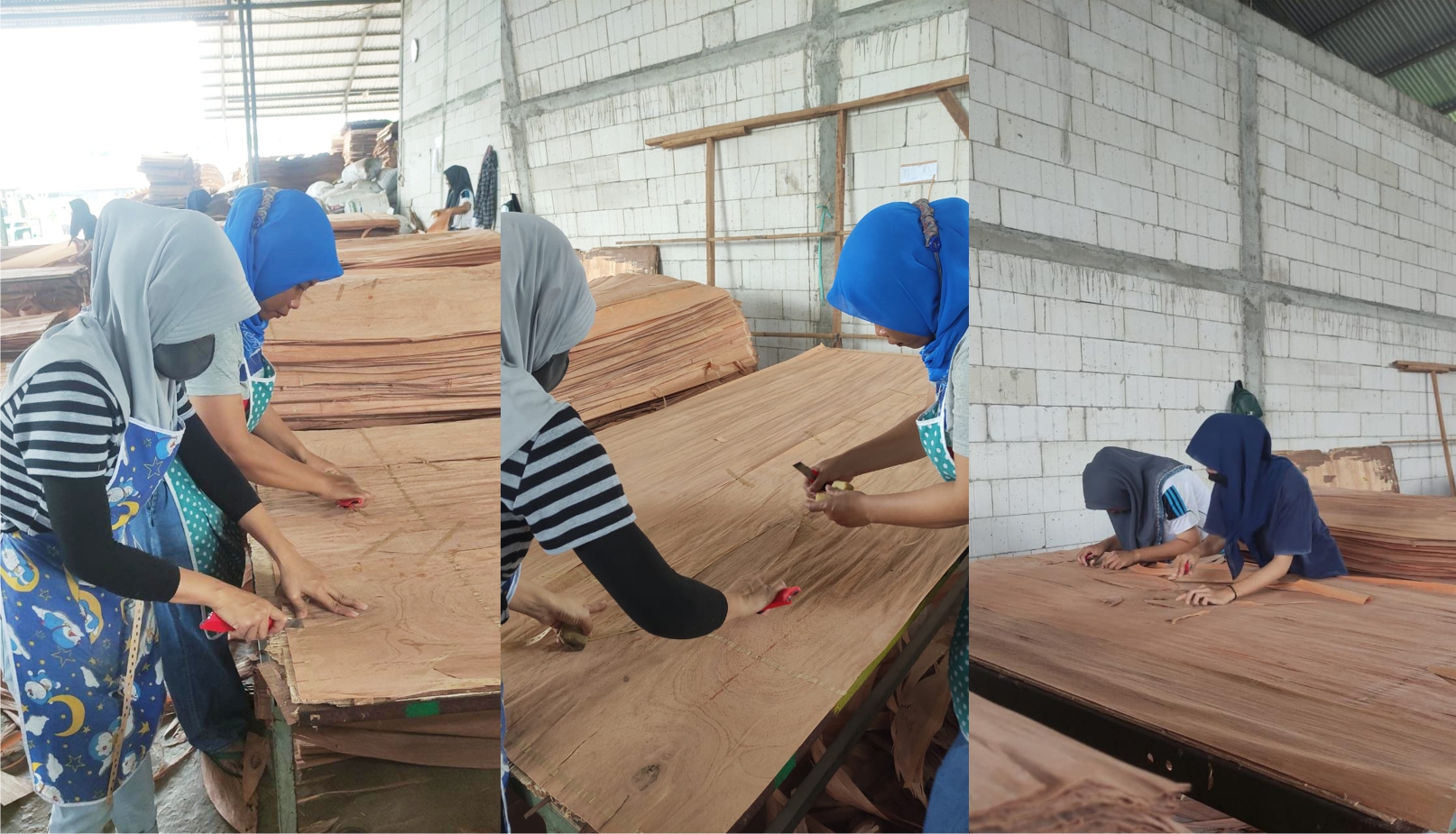
Faceback repair is performed to correct minor defects in veneers without compromising their strength and structural function. This process must meet standards to ensure they remain suitable for production and export.
Main Conditions for Faceback Repair:
1. Types of defects that can be repaired
Small knots
Pin holes
Hairline cracks
Local non-structural defects
2. Limited repair area
Repairs are only performed in specific areas and should not be excessive to avoid affecting the strength of the faceback.
3. Similar repair materials
The veneer patch must be of the same wood type, with the grain aligned, and close to the original material in color.
4. The surface must remain flat and tight.
The repair result must not protrude, have holes, or interfere with subsequent pressing processes.
5. Quality remains up to grade.
After repair, the faceback must pass the grading and QC process according to production standards and the buyer’s requirements.
6. Does not interfere with finishing functions.
Repairs must not impede the pressing, lamination, or finishing processes of the plywood.
Conclusion
Faceback repair is not just a repair, but a quality strategy to maintain a balance between product quality, production efficiency, and customer satisfaction. The process of repairing minor defects in faceback veneer sheets before they enter the next plywood production stage. Repairs are performed selectively to maintain the visual quality, strength, and product suitability without altering the veneer’s primary function as a support layer for plywood.